Translate

Showing posts with label Cat Breeds. Show all posts

Saturday, September 16, 2017

Kennel Cough

Is your dog coughing more than usual? 


If your dog recently spent a lot of time around other pups and is showing signs of respiratory distress, they may have picked up a curable but stressful illness. Kennel cough is contracted when a dog inhales bacteria or virus particles. Their respiratory tract is coated with mucus that traps the particles, resulting in the voice box and windpipe becoming inflamed. Find out which symptoms to look for, ways to help your canine recover and more about the vaccines needed to keep you pet healthy.


What Is Kennel Cough?


Kennel cough is also referred to as tracheobronchitis and Bordetella. This disease is a respiratory tract infection where the dog’s trachea and bronchi become inflamed. Kennel cough is highly contagious and a high percentage of dogs are infected at least once during their life. Puppies experience some of the most severe complications since their immune systems aren’t fully developed.


What Dogs Are at High Risk for Kennel Cough?


Puppies are not the only ones at risk. Older dogs and pregnant females also have decreased immune capabilities making them more susceptible to infection. This severe respiratory disease can spread quickly in overcrowded spaces like doggie day care, boarding facilities and groom facilities putting the pups at a higher risk of obtaining it.


Kennel Cough Symptoms


- A dog with kennel cough may be acting completely normal activity-wise and appetite-wise, but the main thing you’ll notice is their cough. Below are some symptoms to be on the lookout for.

- Cough that has a honking sound

- Fever

- Gagging and coughing up phlegm (worse after exercise)

- Nasal discharge

- Severe cases may include: pneumonia, lack of appetite, lethargy and possibly death Kennel Cough Treatment


There are two main treatments for tracheobronchitis and Bordetella. 

Less serious cases require no antibiotics while more serious cases require them. If your dog has minor symptoms then you’ll have to let the disease run its course. An anti-inflammatory agent can be given to your dog to reduce the coughing episodes and help your dog feel more comfortable. If your dog isn’t eating, has a fever and is having severe respiratory problems – your dog may have pneumonia, this means antibiotics will be suggested by your vet.
While your pup is recovering from kennel cough remove any items from around his neck. This includes collars, scarves and bandanas. Use a body harness Instead of a collar for your dog on walks to prevent stimulation of the coughing reflex.


Kennel Cough Vaccine

There are three types of vaccines for this disease: injection, nasal mist and oral. This is a common immunization during your pup’s regular vet visits so be sure to ask if you expect them to spend time around other animals. The nasal mist and oral vaccine are given to dogs once a year, but if your pup is at high risk it may be recommended every 6 months. Note that the Bordetella part of the vaccine takes 3 days to be effective. The nasal mist and oral vaccine also provide protection to the animal sooner than the injection does.


Notes: While these vaccines reduce the likelihood of illness, they don’t guarantee your pup won’t get sick. Also, the vaccine does not treat active infections.

Wednesday, June 14, 2017

Owners Danger Mistakes 2 of 3

Misreading Body Language


Sure, you love your dog. But do you really understand him? If you think a wagging tail is always a good sign, you could be in for a nasty surprise. When a dog wants to threaten someone, he may hold his tail high and wave it stiffly back and forth. Mistake this warning for a sign of playfulness and you could get bitten. To avoid misunderstandings, learn about your pet's body language.


Providing Too Little Attention


Just like children, your pets will get bored if you don't play with them. And boredom can lead to troublesome behaviors like chewing, digging, barking, and whining. Bored cats may resort to scratching and excessive meowing. Fight boredom by hiding treats for your pets to find around the house. Provide toys your cat can chase. Teach dogs to play fetch, tug-of-war, or hide-and-seek.


Making Your Cats Share a Litter Box


Multiple cats plus one litter box equals a formula for elimination problems. That's a nice way of saying your cat may choose to pee or poop on the floor. Cats can be very picky about their litter box. If it's dirty or smells like other cats, they may not use it. Experts recommend having one litter box for every cat in your home, plus one extra. It may be helpful to space out their boxes around the home.


Not Socializing Young Pets


It's important to provide puppies and kittens with positive human interaction during their first seven weeks of life. This includes handling and play that fosters trust in people. Reputable breeders will begin this interaction, and you can continue the process when you bring your pet home. To develop a strong bond, play with your new puppy or kitten every day.


Leaving a Dog Alone Too Long


Spending 8-10 hours alone in a crate, tiny laundry closet, or even outdoors is too much for most dogs. It can lead to separation anxiety and destructive behaviors including chewing, soiling, digging, and nonstop barking or howling -- even depression in a timid dog. Better choices are doggie day care, a mid-day visit from a pet sitter, or a canine companion. Adult dogs can go 4-5 hours in a crate but need exercise before and after. (SEE HELP  http://animpets.blogspot.pt/2017/02/not-only-do-dogs-need-their-daily.html  )


Setting No Rules


Some people expect their pets to know right from wrong without being told. But human etiquette does not come naturally to dogs and cats. You need to make it clear that jumping up on people, scratching the furniture, and peeing on the carpet are unacceptable. Be consistent about the house rules, and reward your pets for good behavior. If you need guidance, consult a trainer promptly.


Scolding Pets for "Accidents"


If you come home to find a puddle of pee on the floor, you may have the urge to yell at your pet. But animal behavior experts say this will do no good at all. The transgression took place in the past, and your dog or cat won't know why you are yelling. A better strategy is to praise your pets immediately when they do their business where they are supposed to.


Leaving Young Kids Unsupervised


Most children adore animals, but sometimes their enthusiasm can lead to someone getting hurt. Young kids may play too rough, pushing a dog or cat to strike out in self-defense. Be sure to supervise play time when a new pet joins the family. Set rules for how children should treat the pet and teach them to recognize the signs that a dog or cat wants to be left alone.


Thursday, February 9, 2017

15 Hypoallergenic Dogs and Cats 1 of 2

If you love animals but hate allergies, you may be tempted to spring for a pricey hypoallergenic pet.

Not so fast. Studies suggest hypoallergenic cats and dogs can cause just as many symptoms as the regular kind, says James Seltzer, MD, a spokesperson for the American College of Allergy, Asthma & Immunology. That’s because skin and saliva proteins, not just hair, trigger allergy symptoms.

The only pets proven to be hypoallergenic have scaly skin—like iguanas and snakes, he says. That said, if you’re dead set on a furry pet, here are a few that are touted—but not proven—to be better for people with allergies.


Bedlington Terrier

Think your best bet is a short-haired dog? Surprise! You’ll find short- and long-haired breeds populate the American Kennel Club’s (AKC) list of dogs that do well with people with allergies.
That’s because it’s not the dog’s hair per se that causes allergies, it’s the saliva, skin, or other proteins. Allergens (particularly saliva proteins) can latch on to the hair, so less shedding in general—rather than the length of the hair—may be helpful.

Bedlington terriers have curly, wooly coats with an extra mop on the top of the head, and weigh 17 to 23 pounds.


Bichon Frise

Known as “powder puff” dogs, bichon frises have a soft silky undercoat and a more coarse and curly outer coat.

In general, dog allergens are microscopic particles that can hitch a ride on other air pollutants, including cigarette smoke and particulate matter generated by traffic.

Cutting down on indoor air pollution can help stop the circulation of symptom-triggering allergens in your home, experts say. These dogs weigh about 10 to 18 pounds.


Chinese Crested

This pup sheds little to no hair, which again can lower—but not eliminate—allergens in the home.

One member of the breed, Sam, had the dubious distinction of being voted the unofficial world’s ugliest dog for three years in a row.

Chinese crested dogs comes in two versions—hairless, which have hair on the head, feet, and tail; and powderpuff, which have a soft coat over the entire body.

These dogs weigh 10–13 pounds.
 

Devon rex cat

The Devon rex has big ears, an elfin face, and a coat that can be either thin and suede-like or a mop of loose curls, according to the Cat Fanciers' Association (CFA).

These cats have a "dubious" reputation for being hypoallergenic, and symptoms will vary "according to an individual's personal allergies," says the CFA.

In general, kittens shed more allergens than cats. Although the levels seem to drop at 6 to 12 months of age, "they still cause allergies," says Dr. Seltzer.


Irish Water Spaniel

"If you do the grooming outside the house you're not going to stir up as much allergen."
Regular grooming and bathing of dogs can reduce, but not eliminate, allergens, says James Sublett, MD, section chief of pediatric allergy at the University of Louisville School of Medicine.

The AKC says they "require brushing every few weeks and trimming every two months to neaten and shape the coat."

These dogs have a curly coat and can weigh 45 to 65 pounds.


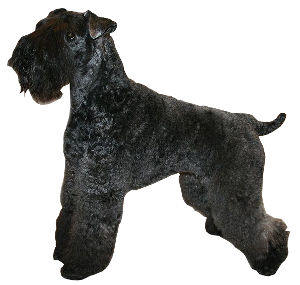
Kerry Blue Terrier

These dogs have a soft, dense coat and weigh 33 to 40 pounds.

Originally bred as hunters, they may not do well in households with cats or other small pets, according to the AKC.

Dr. Sublett notes that if "you're allergic to one dog, you're allergic to all dogs."

There's "not really any guarantee that an animal will be hypoallergenic," he says.

Wednesday, January 18, 2017

Turkish Angora Cat

One of the most outgoing and affectionate of all cat breeds, the rare and beautiful Turkish Angora has a fascinating history and is considered a national treasure in its native land. Many Turkish Angora owners in the United States consider their cats a treasure as well!

 Turkish Angora CatTurks are not only intelligent, but extremely adaptable, loving and playful, which makes them an excellent choice for families with young children, and lively companions for senior adults. They readily accept dogs and other animals, but their assertive natures often make them the “alpha” pet in the household.
Elegant, finely-boned creatures, Turkish Angoras are graceful, energetic and usually the first to welcome visitors into your home. It is also not unusual for a pet Turk to act as the “host” at a party or other gathering, inspecting and interacting with every guest. It is no wonder that they are often considered “dog-like!”


The Turkish Angora’s soft, silky coat rarely mats and requires only minimal grooming. Most breeders recommend combing once or twice a week with a fine-toothed comb or slicker brush to remove excess hair and keep the coat looking and feeling its best. Like all long-haired breeds, they lose some coat during the summer months, when more frequent combing may be needed to prevent hairballs. Most likely, the breed originated in the mountainous regions of Turkey, where it developed an unusually soft, medium-long coat for protection against the harsh winters. Possibly it evolved from the Manul cat, a small feline domesticated by the Tartars. This pure, natural breed can trace its written history as far back as 16th-century France. However, in the early 1900s, it was used indiscriminately in Persian breeding programs and virtually disappeared as a separate breed. For many years, all longhaired cats were referred to simply as “Angoras.”Angora CatFortunately for cat lovers, controlled breeding programs had been set up in Turkey to preserve this living treasure. There, in the 1950s, at the Ankara Zoo, the Turkish Angora was discovered by American servicemen and re-introduced to the cat fancy. All Turkish Angoras registered by CFA must be able to trace their ancestry back to Turkey.
Although the first import on record arrived in the U.S. in 1954, it was not until the mid-1960s that the breed became numerous enough to seek recognition from CFA. White Turkish Angoras were accepted for registration in 1968, for Provisional Breed competition in 1970, and for Champion-ship competition in 1972. The first CFA grand champion, GC NoRuz Kristal of Azima, came in 1976. However, it took another two years before colored Turkish Angoras were permitted to compete in Championship with their all-white siblings.

Wednesday, December 14, 2016

Cat Breed - Exotic Shorthair

Exotic Shorthair


Exotic shorthair cat
The Exotic Shorthair is a breed of cat developed to be a shorthaired version of the Persian. he is similar to the Persian in many ways, including temperament and conformation, with the exception of the short dense coat. It has even inherited many of the Persian's health problems.
The birth of the Exotic Shorthair began in earnest in the late 1950s, when American cat breeder Carolyn Bussey crossed a Persian with a brown Burmese, in the hopes of desigining a brown colored Persian. She ended up with black kittens, but she had made the serendipitous discovery that the resulting kittens were strikingly cute. She believed that cat fanciers might take to the idea of a shorter haired Persian, one especially that would be easier to groom, but that retained the same beauty and easy nature of the Persian.

At this point, the short-haired breeds had been pretty well weeded out of the cat fancy because of the surreptitious crossings that had been conducted by less than honest breeders. While American Shorthairs were being crossed with Persians to produce better coats and to recreate the appearance of the Shorthair, the Shorthair breed itself was losing most of the qualities that made it a distinct breed.
The breeders of these cats fudged their papers to make it appear as though these new physical characteristics were naturally occurring, and cat fancy associations had no option except to all but end the registration of the Shorthair.

Ms. Bussey's exacting standards on breeding brought a more ethical approach to the cross breeding, and the result of her campaign to engineer this new breed was its registration as the Exotic Shorthair. Beyond the initial outcrosses between the Burmese and the Persian with the American Shorthair, the Exotic has been limited to crosses with the Persian, so that the breed can maintain its pedigreed status.

Outcrosses have not been a part of the Exotic breeding program since 1975, when the gene pool was deemed large enough to reliably produce both vigorous and attractive cats that met the standard.


This breed was granted Championship Status in 1967 by the Cat Fanciers Association (CFA). The Exotic made rapid progress from there, and was soon in demand. In 1971, the first Exotic Shorthair achieved the status of Grand Champion, and in 1991, an Exotic was the CFA's Cat of the Year.
The Persian was used as an outcross by some American Shorthair (ASH) breeders in the late 1950s to "improve" their breed. The crossbreed look gained recognition in the show ring but other American Shorthair breeders, unhappy with the changes, successfully produced a new breed standard that would disqualify ASH that showed signs ofcrossbreeding.

One ASH breeder who saw the potential of the Persian/ASH cross proposed and eventually managed to get the Cat Fanciers' Association to recognize them as a new breed in 1966, under the name Exotic Shorthair. During the breeding program, crosses were also made with the Russian Blue and the Burmese. Since 1987, the only allowable outcross breed is the Persian. The Fédération Internationale Féline recognized the Exotic Shorthair in 1986.

Because of the regular use of Persians as outcrosses, some Exotics may carry a copy of the recessive longhair gene. When two such cats mate, there is a one in four chance of each offspring being longhaired. Ironically, longhaired Exotics are not considered Persians by CFA, although The International Cat Association accepts them as Persians. Other associations register them as a separate Exotic Longhair breed.


A breed with only 50 years of history, the Exotic Shorthair, also known as the Shorthaired Persian, is a popular breed for cat fanciers who walk on the calmer side of life. This breed has its playful side, but it prefers to cuddle and relax for most of the day. Perfect for urban homes, or for country living, the Exotic is plush and beautiful to look at, with the added benefit of being one of the more affectionate breeds. A Persian without pretension, the Exotic is also easy to care for, with a minimal shedding but still luxurious coat.

Physical Characteristics


The Exotic Shorthair can be succinctly described as being a short-haired Persian, since for all intents, it meets every standard for the Persian breed, except for the coat. Where the Persian has a long thick coat that requires daily combing for prevention of mats and tangles, the Exotic has a medium length coat that is dense and plush, with a thick undercoat.
The Exotic does not require daily combing, nor does it shed heavily -- in fact, it sheds so little as to be considered a “non-shedding” breed. Weekly combing is recommended simply for the purpose of beautifying the Exotic, and for keeping hairballs to a minimum. The fur on the Exotic is so thick, that this is one of those particular breeds of cats that looks much bigger than it truly is; needless to say, it is a big cat.

The Exotic may grow to be up to 15 pounds, but in height it remains fairly short and close to the ground. The appearance is cobby with short, stout legs holding up a round, muscular physique. It is compact, not fat, with the weight being attributed to the density of the bones. Proceeding upward to the crown, the neck carries the athletic build: short and substantial, topped by an impressively sized head. Exotics are acceptable in any color and in any coat pattern, including color point (like Siamese), white, striped, and calico.
The face of the Exotic is identical to the Persian, with the same standards in place. There are two features which particularly cause the Exotic to stand out. This breed is categorized as brachycephalic, which means that the skull, and by extension, the face, is short and broad, with a flattened muzzle. The other natural characteristic this breed has, and which boosts its popularity, is its pedomorphic appearance, meaning that the face of the Exotic retains its kittenish expression, with large, round, widely set eyes, small ears, a short nose, and a large, round head. This “cuteness”, along with its ease of grooming, and its agreeable and playful nature, make the Exotic one of the top choices for companion animals.


Facts About Exotic Shorthair Cats


They’ve Only Been Around for 50 Years

The exotic shorthair breed began in the 1950s when American shorthairs were bred with Persians. Burmese and Russian blues were also bred with Persians to get the short-haired gene.


They Can Be Extreme or Traditional

Extreme exotic shorthairs have a very distinct appearance with flatter faces, tiny noses, and large eyes. Traditional exotic shorthairs have less flat faces and slightly longer noses.


Low Maintenance

Exotics are sometimes called “the lazy man’s Persian,” because they require only weekly combing (while Persians require intensive grooming). They have a dense undercoat that gives them a puffy appearance, but even still they have little to no shedding.


Love of Lounging

If you’re looking for a cat who loves to cuddle, exotics are it. They tend to follow their owners around the house and will jump into your lap as much as possible.


They Love Companionship

Exotics love the company of others, be it from their humans or other cats (and even dogs). If you’d like more than one pet, exotics are therefore a good choice as they tend to get along well with others. Exotics are also a good choice for people who are home often… but not for those who are gone for long hours each day.


They’re Playful

Persians are known for being lazy, but exotics enjoy playing with toys. While they’re still lap cats at heart, exotics can be quite playful as well.


Garfield

It’s thought that the comic-strip cat Garfield is an exotic shorthair, due to his appearance. However, most exotics are far friendlier, and not as lazy, as the cartoon cat.

They Need to Warm Up to Strangers

Exotics are very affectionate toward their families, but they shy away from strangers. If an exotic meets someone new, it will take a little time for him to feel comfortable around the person.


A Favorite Cat Breed

As mentioned, exotics are the second most popular cat breed in America, a title they’ve held for the last three years.