Translate

Showing posts with label Endangered. Show all posts

Friday, May 5, 2017

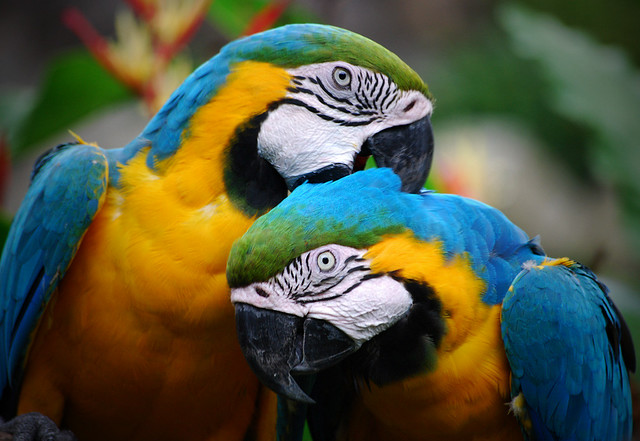
Tips for Caring for a Parrot

A growing number of people are discovering that parrots make the perfect pet. Parrots are really beautiful, fascinating and super smart creatures. However, you need to learn about caring for them before running out to the breeder and buying the first parrot that you see. Here are a few useful tips for caring for a parrot.

Tips for Caring for a Parrot


Be ready for a messy and noisy house


Parrots toss fruit peels, seed casings, their toys, and the area around their cage can get very messy. Moreover, there’s also the matter of feathers and droppings. A large parrot can make lots of noise. Whether they are yodeling a country song or yelling nonsense, you cannot count on your parrot to be quiet just because you want to take a nap. Putting them in your garage or shutting them away in an isolated room is not a good option. In this way your parrot will become emotionally disturbed and can behave psychotically.


Consider location and temperature


Although parrots are social creatures, every parrot may have different needs. So depending on your parrot’s temperament, place the cage in the area where your bird will often interact with you. A kitchen is a bad place since cleaning and odors from cooking can be very harmful to your parrot! Parrots can tolerate a wide range of temperatures, so if you keep your house at a comfortable temperature for yourself, your parrot will also be comfortable. Temperature stability is the most important factor. Fluctuating temperatures can have a big effect on your parrot’s health.


Vary your parrot’s diet


No one likes to have the same thing every single day. Your parrot needs a varied diet with a wide range of nutritional value. Don’t feed your parrot seeds only. Discuss with your veterinarian what a better diet for your parrot. It’s usually agreed that a parrot needs a mix of seed, pellet, fresh leafy greens, veggies, legumes, grains and some fruits. Keep in mind that parrots must never be fed chocolate, avocado, alcohol, caffeine, salty or sugary snacks.


Keep an eye on claw, beak and feather health


When your parrot’s claws grow too long, go to a vet to trim them. Never try to do it by yourself since parrots have a very active blood supply to their claws and a cut could lead to a blood loss. Feather and beak condition are a great indicator of health. A lot of parrot deficiencies and diseases show up as poor feather condition or malformations of the beak. If your parrot shows change in feather or beak condition, see your vet as fast as possible.


Teach your parrot to talk


If you want your parrot to talk, you’ll need to spend a lot of time teaching it. If intense, limit your teaching sessions to 15 minutes at a time or just repeat the same words and phrases a few times during your ‘lesson.’ Parrots usually mimic the things they hear most often. Keep the phrases short, two or three words usually work best. After your parrot has mastered some words and phrases, you can teach it some useful communications.


Clean the cage


The bottom of the cage must be cleaned every two days, if your parrot is not too messy. Replace any liners and discard any seeds, shells, gravel, etc. Clean all of the toys in the cage. It’s also recommended to clean up any mess that does not require too much time once a day. Make sure you use a bird-safe disinfectant, which you can buy in your local pet stores.


Replace toys in different places


Once you’ve finished washing the cage, put your parrot’s toys back inside, replacing them in different places. Parrots are very intelligent and intensely curious, and unlike dogs and cats, they like changing stimuli.


Regularly visit the vet


While some parrots can be absolutely healthy forever, most of them still have some health problems, which could be solved with preventative veterinarian consultations. However, make sure your vet is one who sees parrots specifically or you’ll just be wasting your money.


Do you have any other tips for caring for a parrot? Feel free to share them with us in the comments section.

Saturday, February 4, 2017

Animals can become mental ill

Flint was hit hard when his mother Flo passed away. He became withdrawn and stared into space. He also stopped eating and became weak. After a few days, Flint rested close to where his mother had lain, and died.


Flint was a chimpanzee living in Gombe National Park in Tanzania. His story was described by primatologist Jane Goodall in her 2010 book Through a Window. She contends that he was suffering from depression.

To our eyes, many animals seem to suffer from forms of mental illness. Whether they are pets, or animals kept in ill-managed zoos and circuses, they can become excessively sad, anxious, or even traumatised.

We have tended to think of psychological illnesses as a uniquely human trait. But that may be wrong. There is growing evidence that many animals can suffer from mental health disorders similar to those seen in humans. These unfortunate animals could help us understand how and why humans become mentally ill, and why these debilitating disorders ever evolved at all.Many of us have seen or heard of pets that become sad after the loss of a companion. Sometimes, their loss is too deep to recover from, and they may even die – as Flint apparently did.But animal mental illness can take many forms. Some pet birds obsessively pluck their feathers, and some dogs obsessively lick their tails or paws, much as some humans obsessively clean their hands. Some animals are also known to self-harm, for instance pulling out their own hair.

It seems that animal mental illness can be triggered by many of the same factors that unleash mental illness in humans. That includes the loss of family or companions, loss of freedom, stress, trauma and abuse.

This is most easily seen in animals that are held in captivity.In a 2011 study, scientists found signs of depression and post-traumatic stress disorder (PTSD) in chimpanzees that had been used in laboratory research, orphaned, trapped by snares, or been part of illegal trade.Stressful events can even leave marks on animals' genes. In 2014, researchers found that African grey parrots that were housed alone suffered more genetic damage than parrots that were housed in pairs.The researchers examined the parrots' telomeres: caps on the ends of their chromosomes that slowly deteriorate with age or stress. 9-year-old parrots that were raised alone had telomeres as short as pair-housed birds that were 23 years older.It seems that social deprivation is stressful for parrots, just as it is for humans. Other stressful events can also leave their mark on animals.For example, many military dogs are thought to be suffering from a canine form of PTSD. They behave similarly to war-traumatised soldiers. Some of these dogs are being treated using drugs used to cure panic attacks and anxiety in humans.

Similar behaviours, such as shaking with fear, are often seen in civilian dogs that have been through a natural disaster or been abandoned by their owners.

So far, all these examples have come from captive mammals or pets. That probably reflects our own preferences for certain animals.

"It's the animals that we find very charismatic, like elephants or chimpanzees, or animals that we share our homes with, like dogs," that command our attention, says animal behaviour expert Marc Bekoff.But this doesn't mean that animals in the wild cannot suffer from mental illnesses.

"He didn't quite get what it was to be a coyote," says Bekoff. "He was socially very maladaptive, and he didn't seem to understand what other coyotes were saying to him or doing. And he didn't seem to know how to play."

In his 2008 book The Emotional Lives of Animals, (HERE FOR SALE) Bekoff suggested that "Harry suffered from coyote autism".


There may be a simple reason for that: maybe animals with mental disorders don't make it in the wild. They do not necessarily get the care or support that mentally ill humans do, so if they can't perform critical tasks they may not survive long.
That's possible, but it could also be that people simply haven't looked, says Bekoff. Even if they see animals that seem sad or otherwise behaving oddly, they usually don't try to figure out what could be happening.More profoundly, it is difficult to tell if a seemingly abnormal behaviour is a sign of illness, or just out of the ordinary. In many cases we don't know enough about what constitutes "normal behaviour" to decide.Sometimes, "it's very clearly a disease and something is wrong with the animal," says Eric Vallender of the University of Mississippi in Jackson. But what if an animal has been through a stressful experience, yet seems unaffected?"What's unclear then is whether this is because it doesn't look any different to me as an observer, a human watching the animal, but another animal would say that there is something different," says Vallender. "Or if there's truly no difference."

Doctors can ask human patients how they feel, but animals cannot tell us if they are sad or happy, or if they are hallucinating.

"All you can do with animals is to observe them," says Vallender. "Imagine if you could study mental disorders in humans only by observing them. It would be really hard to tell what's going on in their brain."

Faced with these obstacles, scientists have begun looking at animals' genes."A lot of mental disorders can be quite different. But what we do know is that they have a very, very strong genetic component to them," says Jess Nithianantharajah of the Florey Institute of Neuroscience and Mental Health in Melbourne, Australia.

All mental disorders, from depression to schizophrenia, involve abnormal behaviours. Those behaviours are influenced by genes just like other behaviours.

So the idea is to identify genes that can cause abnormal behaviours in humans and other animals. By tracing the origins of these genes, we can trace the origins of mental disorders.

Perhaps unsurprisingly, it turns out that many of the genes implicated in mental illnesses are involved in brain function. Some of the most important parts of our brains are the synapses: junctions between individual brain cells that allow them to transfer information. Synapses are involved in many cognitive processes, such as learning new facts and paying attention.


Many mental health disorders arise when something goes wrong with these aspects of the brain. For example, many children with autism have learning disabilities, and patients with schizophrenia find it difficult to form coherent thoughts.

A host of genes are involved in building synapses. These genes code for proteins that assemble into synaptic junctions, and Nithianantharajah says they are at the core of many cognitive processes.

In a 2012 study, Nithianantharajah and her colleagues reconstructed the history of one family of synapse genes, known as Dlg.Invertebrates – animals like flies and squid that lack backbones – have only one Dlg gene. But all vertebrates – backboned animals like fish, birds and apes – have four.

During the course of evolution, the original Dlg gene was duplicated twice, giving rise to the four copies found in vertebrates, says Nithianantharajah. These gene duplication events happened about 550 million years ago, possibly in a tiny worm living in the sea.

The four Dlg genes found in vertebrates are subtly different, and the team found that each one regulates distinct cognitive behaviours.

"What this means is that we have far more tools in our repertoire to be able to perform different types of complex behaviours, that many invertebrates don't necessarily do," says Nithianantharajah.

But in vertebrates that have four copies of the genes, the genes act like a dimmer switch: they can be turned up and down in different combinations, allowing the animal to fine-tune behaviours.

In short, the genetic duplication events gave vertebrates a wider range of genes, enabling them to have more varied and complex behaviours.But there was a cost. Mutations in these extra Dlg genes can give rise to many psychological disorders.

They also found that the Dlg genes have not changed much over evolutionary time. Nithianantharajah says that is because they are so fundamentally important to animals' brains, so evolution has largely kept them as they were.

Her data suggests that Dlg had its origins in the simplest of animals. That would imply that both intelligence and psychological disorders also began early in animal evolution.Based on that, Nithianantharajah says, it is possible that invertebrates like honeybees and octopuses could also experience mental illness."We know that mutations in certain brain genes, and particularly the synaptic genes, play a large role in disrupting behaviour," says Nithianantharajah. "That's the core of what a mental disorder is. So just like in vertebrates, if you mutate various synaptic genes in invertebrates, you could lead to abnormal behaviour."

So far no such study has been published, but there is observational evidence that invertebrates really do suffer mental disorders.

A 2011 study subjected honeybees to violent shaking, and found that they seemingly became more pessimistic as a result. Faced with a smell they could not identify, they were more likely to behave as if it was unpleasant.

Perhaps this shouldn't be surprising. While we tend to think of invertebrates as "lower" animals, lots of them do have brains and many are far more intelligent than the stereotype would suggest.That said, it is one thing to suggest that animals like dogs or even bees might suffer from emotional disorders like depression or anxiety. Other mental illnesses like schizophrenia seem to affect more complex forms of thought, so we might expect them to be exclusive to humans. But that may not be the case.In a 2014 study, Vallender and his colleague Lisa Ogawa studied genes thought to be associated with schizophrenia and autism in 45 mammalian species.


Dig Gene

 
If these genes had changed more in humans than in other species, it would imply that the disorders were exclusively human.

But that was not the case. The genes had changed in humans, but also in Old World monkeys, apes, and even distantly-related mammals like dolphins.

So far it's not clear what this actually means for these animals' mental health, says Vallender. "All we know at this point is that the proteins seem to be changing." There is a long way to go, but genetic studies like these do suggest that all animals with brains have the capacity to experience some form of mental illness.

From our point of view, this may actually be a good thing, because it offers hope for better treatments.

Many of the therapies and drugs that are being developed to treat human mental disorders are being tested on animals. That only makes sense if the animal in question has a brain that works similarly to ours.

"If a human breaks a leg, or if a cat or horse breaks a leg, a broken leg is a broken leg. The species does not matter much," Vallender says. "But mental health is really different. This is because the human brain is very different from other species, and we really need to understand the things that are the same about it and those that are different."

More profoundly, the evolutionary history of mental disorders suggests that we have been looking at human mental illness wrong.

It's still common to see mental illness branded as a form of weakness. We struggle to understand that people with severe depression or anxiety cannot simply "get over it", any more than a person could will themselves to survive a heart attack.

But far from being something limited to pampered modern humans, mental illness can strike many kinds of animals and seems to have been around for hundreds of millions of years. Just like seemingly more physical disorders like cancer, it can be traced back to mechanical things such as genes and proteins within our cells.

Mental disorders seem to be the price animals pay for their intelligence. The same genes that made us smart also predisposed us to mental illness. There's nothing shameful in that.

Friday, February 3, 2017

Domestic Foxes in Russia

In the 1950s a Soviet geneticist began an experiment in guided evolution. He wanted to show how domestication works.


Animals and Pets - Domestic Fox
From the richly-plumed red fox to the big-eared fennec fox, foxes look adorable. Because of this, people are sometimes tempted to keep them as pets. However, those who have tried have struggled. Unlike dogs and cats, the different species of fox have not been domesticated. Domestication only happens over a long period of time through selective breeding. Cats and dogs were domesticated by humans thousands of years ago to be pets and companions. Sheep, goats and other animals were domesticated for food.

But there may be more to it than that. People who have tried to simply tame individual foxes often speak of a stubborn wildness that is impossible to get rid of. This suggests that foxes are harder to tame than other animals. However, one extraordinary experiment has found a way to domesticate foxes. This one study could help us understand how our ancestors domesticated other animals, and indeed what domestication is.
Biologist David Macdonald studied foxes at close quarters for years. For a time, he had foxes living at home, which he recounted in his 1987 book Running with the Fox. The foxes did not last long in Macdonald's house. He found that they would tear up the living area and create chaos. Others who have tried living with foxes report the same thing. Richard Bowler, a wildlife photographer based in Wales, looks after a few foxes in a large outside space at his home. He reports that they are nervous and shy. 

The youngest fox, a vixen called Hetty, is extremely shy around people – even though she was captive-bred, and Bowler and his partner fed her through the night from when she was one week old. He describes the temperament of the foxes as "highly wired".

In the UK it is legal to keep a fox as a pet, but that does not mean it is a good idea.

The Royal Society for the Prevention of Cruelty to Animals (RSPCA) does not condone the keeping of foxes as pets. "Because foxes are wild animals and do not fare well as domestic pets, they should not be kept as such. Even the most experienced fox experts have had difficulty in keeping adult foxes successfully in captivity as they have very specific needs," it says.Occasionally people connected to wildlife rescue centres report that they have managed to tame foxes. However, usually these animals are recovering from toxoplasmosis, a parasitic disease that damages the brain, leaving the animals unafraid of human touch.
Meanwhile, Britain's urban foxes are often described as being bold and brazen around humans, compared with their countryside cousins. They will stand and stare at passers-by on the streets and even approach people with food.
It is possible that human behaviour in towns and cities has altered the behaviour of individual foxes: if a fox grows accustomed to being fed by hand by one person, it may be more likely to approach another. However, this does not qualify them as tame.So pet foxes are not generally a good idea. Unless, that is, the fox is from the only tame population in the world, an extraordinary scientific experiment that started life in Soviet Russia.

In the late 1950s, a Russian geneticist called Dmitry K. Belyaev attempted to create a tame fox population.

Through the work of a breeding programme at the Institute of Cytology and Genetics at Novosibirsk, in Russia, he sought to trace the evolutionary pathway of domesticated animals. His test subjects were silver-black foxes, a melanistic version of the red fox that had been bred in farms for the colour of their fur.

Belyaev died in 1985, but the project is still ongoing. It is now overseen by Lyudmila Trut, now in her 80s, who started out as Belyaev's intern.

The Russian fox farm was the first of its kind.

"There is archaeological data that people made individual attempts to domesticate the fox, but this process was not finished," says Anastasiya Kharlamova, one of Trut's research assistants. "Possibly the reason was that the cat was domesticated at a similar time, and supplanted the fox as a possible candidate to be domesticated."

Belyaev's experiment aimed to replay the process of domestication to see how evolutionary changes came about.


There are many unanswered questions relating to domestication. One is what traits or qualities Stone Age people selected for when they set out to domesticate animals. Belyaev believed that selection for just one trait – tameability – would be enough to create a domesticated population.

It was a risky area of research.The study of genetics had been essentially banned in the USSR, as the country's dictator Joseph Stalin sought to discredit the genetic principles set out by Gregor Mendel. Stalin's death in 1953 gave scientists more freedom, but in the early years Belyaev nevertheless worked under the cover that he was breeding foxes to make better fur coats.

First, Belyaev and Trut travelled to various fur farms in the Soviet Union, from Siberia to Moscow and Estonia. There, they chose foxes to take to their own farm in Novosibirsk.

They selected the animals based on how they responded when their cage was opened. About 10% of the foxes displayed a weak "wild-response", meaning they were docile around humans.

"The main task at this stage of selection was eliminating defensive reactions to humans," Trut wrote in 1999. Animals that were friendlier and tolerant to human touch, even to a small degree, were picked out. Those that hid in the corner or made aggressive vocalisations were left in the farm.

Of those friendly foxes, 100 vixens and 30 males were chosen as the first generations of parents.

When the cubs were born, the researchers hand-fed them. They also attempted to touch or pet the foxes when they were two to two-and-a-half months old, for strictly measured periods at a time.

If the cubs continued to show aggressive or evasive responses, even after significant human contact, they were discarded from the population – meaning they were made into fur coats. In each selection, less than 10% of tame individuals were used as parents of the next generation.

"As a result of such rigorous selection, the offspring exhibiting the aggressive and fear avoidance responses were eliminated from the experimental population in just two to three generations of selection," Trut wrote in a study published in 2009.

The foxes at the fox-farm were never trained to become tame. They lived in cages and had minimal contact with humans. Belyaev's aim was to create a genetically-distinct population, so he simply selected for particular behavioural traits.

"Belyaev had one main goal at the beginning of experiment: to reproduce the process of historical domestication at the experiment, during a short time," says Trut. "This goal didn't change. But during the experiment the understanding of evolutionary process changed."

By the fourth generation, the scientists started to see dramatic changes.


The cubs were beginning to behave more like dogs. They wagged their tails and "eagerly" sought contact with humans. They whined, whimpered and licked researchers just like puppies would.

The process was surprisingly quick. "By intense selective breeding, we have compressed into a few decades an ancient process that originally unfolded over thousands of years," wrote Trut in 1999.

These foxes were called the "elite of domestication", and as the generations passed the proportion of these elite cubs grew. By 2005-2006, almost all the foxes were playful, friendly and behaving like domestic dogs. The foxes could "read" human cues and respond correctly to gestures or glances. The vocalisations they made were different to wild foxes.

"The proudest moment for us was creating a unique population of genetically tame foxes, the only the one in the world," says Trut.Brian Hare is associate professor of evolutionary anthropology at Duke University in Durham, North Carolina and author of the 2013 book The Genius of Dogs. He travelled to Russia on the Trans-Siberian railroad to visit the farm, in order to compare fox cubs with dog puppies for a study published in 2005."The fox farm experiment was crucial, in that it told us that domestication can happen relatively quickly in the right circumstances," he says. "The fact that in fifty generations, they were wagging their tails and barking, this is really incredible."

The key point is that the experiment offers a hint as to the stages by which domestication takes place.

"Before, we knew that dogs and wolves were descended from the same ancestor, but we didn't know how," says Hare. "What came first? The fox experiment showed that just by selecting for friendliness, all these other changes, including an increase in social skills, happened by accident."

In fact, Belyaev and Trut soon found that it was not just the foxes' personalities that were changing. Their bodies were too.

"The main surprise was that, together with changing of behaviour, many new morphological traits in tame foxes start to appear from the first steps of selection," said Trut.The domesticated foxes had floppier, drooping ears, which are found in other domestic animals such as dogs, cats, pigs, horses and goats. Curlier tails – also found in dogs and pigs – were also recorded.
What's more, "in only a few generations, the friendly foxes were showing changes in coat colour," says Hare.
The process seems to be ongoing. "At the more advanced steps of selection, changes in the parameters of the skeletal system began to arise," Trut wrote. "They included shortened legs, tail, snout, upper jaw, and widened skull."


The foxes started looking more delicate and, put simply, "cute".

Their reproductive habits also changed. The domesticated foxes became sexually mature about a month earlier than non-domesticated foxes. Their mating season was longer and they could breed out of season. On average, their litters had one more cub.

All these changes were brought on by selecting for one trait: tameability. This gives us a big clue to how domestication works.

The physical traits Belyaev and Trut found, like the floppy ears, were those you would expect in a juvenile. But the domestic foxes carried them through into adulthood, suggesting the selection process had slowed down aspects of their development.


This might have something to do with chemicals in their bodies.

Belyaev reasoned that selecting for tameability changed the mix of hormones and neurotransmitters the foxes' bodies made. He believed behavioural responses were "regulated by a fine balance between neurotransmitters and hormones at the level of the whole organism".

For example, the drooping ears of the domesticated foxes might be a result of slowing down the adrenal glands. This could arrest the cells before the ear has time to stand to attention.
"Selection has even affected the neurochemistry of our foxes' brains," wrote Trut. One example she described was a drop in the "hormone-producing activity of the foxes' adrenal glands."


Domestic foxes also had higher levels of serotonin than farm-bred foxes. That is intriguing, because serotonin is "thought to be the leading mediator inhibiting animals' aggressive behaviour." Serotonin, like other neurotransmitters, is critically involved in shaping an animal's development from its earliest stages.

The project continues to this day. As of August 2016, there are 270 tame vixens and 70 tame males on the farm. However, it has run into financial problems.

"The current situation is not catastrophic, but not stable at the same time," writes Kharlamova. "The main reason of instability is of course the expense of this experiment."


In the 1990s, the institute supported itself by selling fox pelts. At the end of the 1990s, they started to sell the foxes as house pets. At present, a Florida-based company called the Lester Kalmanson Agency Inc imports foxes for those who want to keep them as pets. Each fox costs $8,900, because of the delivery costs.

With the foxes now tame, the researchers are trying to identify the genes that change under selection for tameness. "The main current goals are focused on molecular-genetics mechanisms of domestic behaviour," says Trut.

Belyaev and Trut's experiment may even tell us something about our own evolution.

In particular, one under-appreciated point about our species is that we have, essentially, domesticated ourselves. This is borne out in our behaviour. While we have committed our fair share of atrocities, on the whole we are far less aggressive and violent than our closest relatives, the chimpanzees.

This suggests that human evolution selected for cooperation, tolerance and gentleness – and not, necessarily, for intelligence.

"We always assume that intelligence is responsible for our success," says Hare. "That humans became smarter, which… allowed us to invent wheels and agriculture and iPhones. But what if that wasn't what happened?"

Hare suspects that, "like the foxes, and like dogs, we became friendlier first, and then got smarter by accident. This would mean that our prosocial skills, the skills that allow for cooperation and friendliness, were what made us successful."

We do not know if that is true. But it is a rather encouraging thought.


Monday, January 23, 2017

Photographer finds forgotten Mongolian tribe and captures their unique friendship with animals

Human civilization has come a long way since modern humans appeared about 200,000 years ago in Africa.
And from living in caves and making use of what nature has to offer, humans have learned to build cities with millions inhabitants that our ancestors never could have imagined.
Meanwhile, globalization has made it harder for indigenous cultures to preserve their way of life.
However, there are still some remote, nomadic peoples that have contiued their way of life for centuries. For example, the Dukha people of Mongolia.
They have developed a special relationship with the wild animals of their region, which photographer Hamid Sardar-Afkham has captured in a way that will leave you in awe.
Scroll down to see his stunning pictures:


The Dukha people have created a bond with animals that most people can only dream of. For example, they often use reindeer as transportation.


The reindeer have been domesticated and they are treated almost like family.
Even at a young age, Dukha children learn to train reindeer and gain their respect.


This young girl is getting ready to wash a reindeer calf.


The Dukha people also use reindeer milk to make yogurt and cheese, which are staples of the tribe. They only slaughter a few reindeer per year for their meat and skins.


 Now, there are only some 40 Dukha families left, totaling 200-400 people.


The people are also known as "Tsaatan," meaning "reindeer."


In recent years, the Dukha people have also learned to live with curious tourists.
Visitors buy handicrafts and ride reindeer.


Although they could live in one location, the Dukha people continue to live as nomads.
They move from one place to another throughout the year.


The Dukha people not only have a close relationship with reindeer...


... they also train wolves!


And hunt with golden eagles.


Owning an eagle means high status. And the few who manage to hunt with this large bird of prey often hold a strong position in the society.

Most people hunt small wild animals like rabbits. But they are are also sold in markets.


The Dukha people believe that they have a spiritual contact with animals.


Their special contact with animals allows them to feel at home in nature and maintain their culture.

Lately, the outside world has been influencing them more and more and making it more difficult for the nomads to live in their traditional way.


It's sure great to see the Dukha people's culture and their relationship with the animal kingdom.
That they have managed to preserve their way of life is wonderful—and a good reminder that our world has so many different cultures.


Friday, January 20, 2017

Republicans Are Coming for the Endangered Animals

Donald Trump
Donald Trump’s transition team has been making everyone extremely nervous with its inquiries into employees who believe in climate change, “gender-related” programs, and the money spent on aid to Africa. Now, GOP lawmakers are picking up their cues and are beginning to push hard on legislation that will likely be successful under a Trump presidency, like threatening animals.
The Chicago Tribune reports that Democrats and environmental activists have managed to block many proposed measures intended to limit the power or dismantle the Endangered Species Act, which was established in 1973 in connection with the diminishing population of our national symbol, the Bald Eagle. But now, Republicans want to ditch the whole act:


The Endangered Species Act is often one of the few things standing between land and a big oil-seeking drill. Jamie Rappaport Clark, president of Defenders of Wildlife, told the Chicago Tribune, “Any species that gets in the way of a congressional initiative or some kind of development will be clearly at risk,” adding, “The political lineup is as unfavorable to the Endangered Species Act as I can remember.”
For example, Sen. Jim Inhofe, who is currently glad-handing Donald Trump’s EPA nomination Scott Pruitt at his confirmation hearing, has suggested “one species should be removed from the list every time another is added.” Republican Sen. Dan Sullivan has said he wants to limit applications to protect species to one at a time. 1,600 plants and animals in the U.S. are currently protected by the law, with hundreds more under consideration. Only 70 have ever been “recovered” and removed, as bringing an animal back from the brink of extinction is actually very hard!

Vanderbilt law professor J.B. Ruhl, considered the leading expert on the act, indicated to the Chicago Tribune that even a few small adjustments to the wording of the law will change it from something that can protect huge swathes of land to little more than a hunting limitation. As it turns out, laws are also a delicate eco-system

Thursday, January 5, 2017

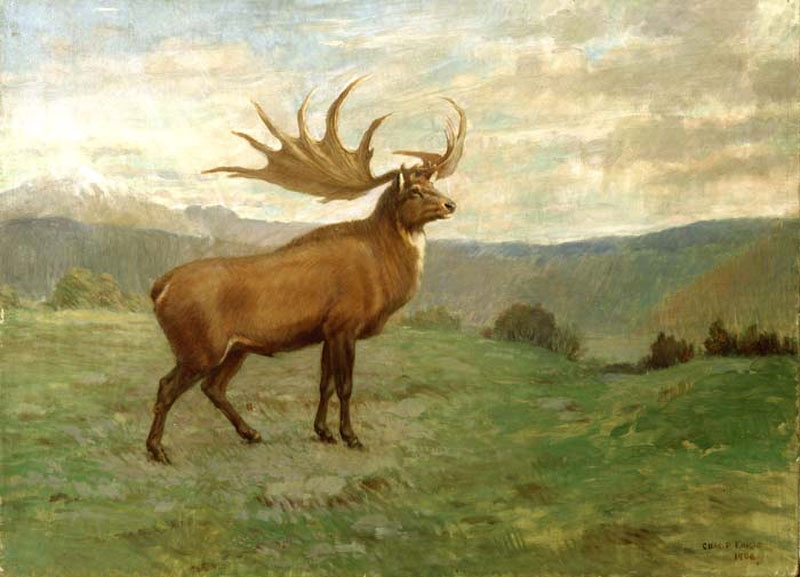
The Irish Elk

The Irish Elk, Megaloceros, is misnamed, for it is neither exclusively Irish nor is it an elk. It is a giant extinct deer, the largest deer species ever, that stood up to seven feet at the shoulder (2.1 meters), with antlers spanning up to 12 feet (3.65 meters). The Irish elk evolved during the glacial periods of the last million years, during the Pleistocene Epoch. It ranged throughout Europe, northern Asia and northern Africa, and a related form is known from China. The name "Irish" has stuck because excellent, well-preserved fossils of the giant deer are especially common in lake sediments and peat bogs in Ireland. The skull on display at the old UC Museum of Paleontology came from such a locality, 18 miles north of Dublin. Such skulls, with their enormous racks of antlers, adorn the walls of castles and hunting lodges throughout Ireland. On the other hand, the complete skeleton pictured at the top of the page, on display at the Paleontological Institute in Moscow, was found at the other end of Europe, near the Russian town of Sapozhka.
Unable to adapt to the subartic conditions of the last glaciation or the marked transition that occured after the final retreat of the ice sheet, the largest deer that ever lived became extinct, the last one in Ireland dying around 11,000 years ago. Megaloceros may have possibly survived in continental Europe into historic times.
Beyond its arresting size and singular appearance, the giant deer is of great significance to paleontologists because of the way in which the animal has become involved in evolutionary debates down through the years.

Can Extinction Happen?

In the seventeenth and eighteenth centuries, it was becoming increasingly apparent that many fossils represented organisms that were not known to survive anywhere on Earth. But to scientists who believed in the Divine creation of the Earth and its life, this posed a jarring philosophical problem: why would a good, perfect God allow any of the animals in His perfect creation to die out completely? Many scientists denied the reality of extinction, and instead suggested that animals known only as fossils would one day be found alive in some unexplored part of the globe. In the words of Dr. Thomas Molyneux, the first scientist to describe the Irish elk:

That no real species of living creatures is so utterly extinct, as to be lost entirely out of the World, since it was first created, is the opinion of many naturalists; and 'tis grounded on so good a principle of Providence taking care in general of all its animal productions, that it deserves our assent.
Molyneux erroneously identified the Irish elk with the American moose, while others thought the Irish elk was identical with the European reindeer. Not until 1812 did the great French scientist Georges Cuvier document that the Irish elk, along with other fossil vertebrates such as the mammoth, did not belong to any living species of mammal. Cuvier's study of the Irish elk was a key part of the documentation that extinction had happened in the past.

Orthogenesis: Evolution in Straight Lines

A once-popular hypothesized evolutionary mechanism was orthogenesis, in which change in organisms was due not to natural selection, but to internal directional trends within a lineage. The Irish elk was once considered a prime example of orthogenesis: it was thought that its lineage had started evolving on an irreversible trajectory towards larger and larger antlers. The Irish elk finally went extinct when the antlers became so large that the animals could no longer hold up their heads, or got entangled in the trees.


Although orthogenesis was a common evolutionary theory in the 19th and early 20th centuries, it has since been abandoned for lack of a plausible mechanism. It is perfectly possible, however, to reconcile the huge antlers of Megaloceros with evolution by selection. Some paleontologists suggested that the enormous weaponry of the Irish elk served a defensive purpose, to kill predators and fight off rivals for mates. A more modern interpretation of the function of the antlers in the giant deer suggest that they were used for sexual displays, as they are in living deer. Some living deer use their antlers in ritualized combats at mating time, in which few individuals actually get hurt. It is possible that the Irish elk used its antlers in this way, but there is another possibility: The antlers of the Irish elk face forward, to show maximum area when the animal looks straight ahead. They may not have been used in combat at all, but simply served as visual signals during courtship. Whichever is the case, sexual selection is the most likely explanation for why the antlers of Megaloceros were so huge. The larger and stronger the antlers, the more successful in mating the male deer would be, and the more offspring he would have — offspring which could inherit parental genes for large antlers.

Wednesday, December 28, 2016

Medical students tortured and killed Monkey tortured and killed in India

Medical students tortured and killed Monkey


Four medical students from the prestigious Christian Medical College in Vellore, India have already failed their oaths, whether it be saving the lives of humans or animals. In a disturbing case of animal cruelty, a one-year-old female monkey was tortured and killed after she accidentally entered the hostel room of the students. According to an animal lover’s Facebook page, another activist told him about the monkey torture; once posted, the photos of the disgusting act went viral leading to the apprehension of the students.


Shravan Krishnan shared the egregious situation after writing a post describing the heart wrenching monkey torture on Saturday, November 19:


Medical students tortured and killed Monkey

“They tied her hands and started abusing and torturing her by beating her with sticks and belts, broke her legs, jaw and finally put a rod up her anus and killed her.”

Krishnan stated the students carried the monkey’s body out and buried her behind the hostel. As students became aware of the situation, they urged the college to act. Another student called People for the Ethical Treatment of Animals (PETA) for emergency help. According to the media , the monkey’s body was exhumed and sent for a necropsy:

“The post mortem showed that the monkey’s neck, hands and legs were tied up with a phone wire. The animal’s knee, neck and ankle were fractured implying that it was thrashed. The worst cruelty that the animal was subjected to, was that it was impaled with a sharp object from behind and it came out the front.”

Animal cruelty charges under IPC section 429 and various sections of Wildlife Protection Act of 1972 have been registered against Jasper Samuel Sahoo, Rohit Kumar Yenukotti, Arun Loui Sasi Kumar and Alex Chekalayil at Bagayam police station. The four students are being questioned, and were suspended on Wednesday from the school after an internal committed preliminary investigation.

The monkey belonged to the Bonnet Macaque species listed under Indians protected species.

Wednesday, December 21, 2016

Iguana

Venezuela Iguana

Some Endangered


Iguanas are some of the largest lizards found in the Americas, with their whiplike tail making up about half of that length. Like other reptiles, iguanas are cold-blooded, egg-laying animals with an excellent ability to adapt to their environment.
Iguana species vary greatly in size, color, behavior, and their endangered status in the wild. Some species, like the green iguana, are quite common; others, like Fiji’s banded iguanas, are endangered. Iguanas native to San Diego County are the desert iguana and the chuckwalla.

HABITAT AND DIET


Different iguana species look and act so differently, you might not recognize them as members of the same family. While some iguanas have colors that are vivid and bright, others have rather dull colors. Because iguanas can be found in a variety of habitats, each species has its own unique adaptations. The marine iguana of the Galápagos Islands is a skillful swimmer, and its black coloration helps it to warm its body after swimming in the cold ocean.
 
 In contrast, the green iguana is at home high in the trees of a tropical rain forest, while still other iguana species have adaptations that allow them to live successfully in the dry, hot desert or rocky areas.

With an emerald green body and bands of white or blue, more prominent on the males, Fiji’s three known iguana species inhabit a multitude of habitats, from coastal swamps and lowland forests to rain forests on Fiji’s volcanic slopes. Highly arboreal, they have long toes with sharp claws and long tails for balance in the treetops. Rarely seen on the ground, banded iguanas move from tree to tree by using the overlapping branches. They are omnivorous, feeding on leaves, flowers, fruits, and small insects.

Adult banded iguanas may reach 21 inches long—more than half of which is the tail. When fully mature, they weigh between 3.5 and 7 ounces, and males tend to be larger and heavier than females.

The Caribbean islands are rich in reptiles, with more than 500 reptile species, 94 percent of which are found nowhere else on Earth. Several Carribbean iguana species are known collectively as rock iguanas, and some are found on just one or two islands. Female rock iguanas lay a clutch of 5 to 20 relatively large eggs each year; the larger eggs result in large hatchlings that evolved in response to the lack of native predators. Unlike their mainland counterparts, such as green iguanas, the island-dwelling iguanas do not need to produce a lot of offspring as a hedge against predators.

The smallest of the rock iguana group are the Turks and Caicos iguanas. All eat a wide variety of fruits and serve as important seed dispersers for many native plants.

Most iguanas are herbivores, eating fruits, flower buds, and young leaves. Some species also eat the occasional juicy mealworm or wax worm! The marine iguana dives in the ocean to scrape algae from rocks. At the San Diego Zoo and San Diego Zoo Safari Park, our iguanas are offered a fruit salad that includes dark leafy greens and a variety of fruits, while some species also receive crickets, mealworms, and wax worms. But because wax worms are high in fat, they are considered the “dessert” part of the menu! Speaking of food, iguanas themselves are eaten by a variety of natural predators—hawks, owls, snakes—and humans. Green iguanas are bred and raised on farms in Central and South America to be eaten by people. Young iguanas are particularly vulnerable to predation by feral cats, and no iguana is safe from a pack of dogs. The iguana’s whiplike tail can be used for defense, and many species have tails with sharp “spines” that pack an extra “punch.”

FAMILY LIFE


No mama for the baby iguana: The females of most iguana species dig a burrow in a sunny area, lay their eggs inside, cover them, and then leave the eggs alone. Even arboreal iguana species leave the trees to lay their eggs. The temperature in the burrow stays a fairly constant 77 to 89 degrees Fahrenheit (25 to 32 degrees Celsius). The warm temperature incubates the eggs. All eggs in a nest usually hatch at the same time, and the young dig out of the burrow without help from the parents. On their own, iguana hatchlings face many dangers.
 

CONSERVATION 


Habitat loss, the introduction of exotic animals that prey on iguanas, capture for the pet trade, and poaching are some of the threats to wild iguana populations. Some species that were once plentiful in the wild are now beginning to disappear. There are several measures that can help iguanas survive, such as captive propagation in zoos, hunting and collecting restrictions, and education programs for people living in or near iguana habitats. As a group, Caribbean rock iguanas Cyclura species are the most endangered lizards in the world. They suffered greatly when humans settled on these islands and began large-scale habitat destruction and alteration. Plantations, homes, and resorts cleared out the plants iguanas fed on, and car traffic became one of the biggest threats to iguanas on the move. Cats introduced to the islands by humans have been eating both iguana eggs and the young hatchlings, causing the iguanas' numbers to shrink.

Working with local governments and other organizations, San Diego Zoo Global is helping these iguanas both here in our Kenneth and Anne Griffin Reptile Conservation Center, and in the field on various Caribbean islands. Our rock iguana breeding program has been so successful that a new facility was built in Puerto Rico to accommodate the growing population. Without this expanded facility, the fate of these beautiful iguanas would be less certain. The breeding program includes supporting the animals in our facilities and field programs to establish new populations and to move current populations to small islands with no people, so the iguanas have room to grow.

We use a technique called “headstarting”: iguana eggs are incubated in a facility and the hatchlings are taken care of in large pens until they are large enough to protect themselves from predators, thus giving them a head start in the wild. We have translocated some species to smaller uninhabited and protected islands or cays where, it is hoped, the iguanas can flourish.
To date, 179 Anegada iguanas Cyclura pinguis have been raised and released, nearly doubling the size of the wild population. Our goals include removing feral predators from Anegada Island and restoring iguanas to some of Puerto Rico’s satellite islands, where the species historically occurred.

Since 2002, our recovery program for the Grand Cayman blue iguana Cyclura lewisi has boosted their numbers from a low of 25 in the wild to more than 500 released into a new wilderness reserve where they are now reproducing! San Diego Zoo Global is one of several organizations in North America working to produce a captive, self-sustaining population of Jamaican iguanas Cyclura collei to ensure genetic diversity for the species' worldwide population. A male iguana hatched on August 30, 2013—the first time this species was successfully bred at our facility.

In addition, we’ve helped implement conservation education programs on some of the Caribbean islands to increase public awareness and support for iguana conservation initiatives.

The Lau banded iguana Brachylophus fasciatus, first described in 1800, was believed to be the sole iguana species in Fiji for nearly 200 years. In 1979, the Fiji crested iguana Brachylophus vitiensis was found on one of Fiji’s volcanic islands, and that island was soon set aside as a crested iguana sanctuary, which helped increase the species population dramatically. A third species of Fiji iguana was described in 2006, the Fiji banded iguana Brachylophus bulabula. San Diego Zoo Global’s Genetics Division has been working to further test blood and skin samples from iguanas living on 23 of Fiji’s islands, and the results suggest at least another new species is in need of description! These genetic studies will help determine how iguanas should be protected in Fiji and which managed-care lineages could be used for reintroduction. The government of Fiji has loaned 50 of these iguanas to use as part of a species survival program.

Both banded and crested iguanas are endangered, due to habitat destruction for housing and the clearing of land for farming and livestock, as well as the introduction of mongooses and feral cats, which prey upon the iguanas and their young. Mongooses were brought to Fiji to hunt rats in the sugarcane fields, but they spread to wild areas and also feasted on the iguanas.

Fiji is also battling the introduction in 2000 of the green or common iguana Iguana Iguana, called the American iguana in Fiji. That species has become quite a pest and is said to be a threat to local vegetation; eradication measures are underway.

Visiting the San Diego Zoo and the San Diego Zoo Safari Park helps the giant rock iguanas of the West Indies, which are the most endangered group of lizards in the world. Our rock iguana breeding program has been so successful that a new facility was built to accommodate the growing population. Without this expanded facility, the fate of these beautiful iguanas would be less certain. The breeding program includes supporting the animals in our facilities and supporting a field program to establish new populations and to move current populations to small islands with no people so the iguanas have room to grow.

Thursday, December 15, 2016

The 5 Most Endangered Canine Species

Endangered Canine Species


Domesticated dogs are some of the most popular animals on the planet, but their cousins in the wild aren't always as beloved. For thousands of years humans have persecuted wolves, jackals, dingoes, foxes and other members of the family Canidae, pushing many species into or close to extinction. Here are five of the most endangered canine species and subspecies, three of which only continue to exist because a few people and organizations have taken extraordinary efforts to save them.


The Ethiopian Wolf


The Ethiopian wolf
Ethiopian wolves (Canis simensis) don't have the smallest population on this list—estimates put the species at 450 to 500 individuals—but looking at that number alone hides the true circumstances of these rare canids. The animals live in six fragmented population groups, some with fewer than 25 wolves, all of which are scattered hundreds of kilometers apart from one another. Few Ethiopian wolves are able to travel from one pack to another, so the species is at a high risk of inbreeding according to a study I covered last year. Meanwhile the wolves face continued persecution from livestock owners, reduced prey levels, diseases from domesticated dogs and a rapidly growing human population. Luckily the wolves' biggest subpopulations live in protected areas, and efforts are underway to establish a new national park that will protect them even further, but we have already seen one subpopulation die out in the past decade, and it's likely we'll lose one or two more in the coming years.


The Mexican Gray Wolf


Once hunted into near-extinction as a supposed threat to cattle and other livestock, Mexican gray wolves (Canis lupus baileyi) currently live in a sort of limbo. All of the wolves alive today are descended from just five animals captured in 1973 to prevent the subspecies from disappearing. About 300 wolves live in captive-breeding facilities in the U.S. and Mexico. Roughly 60 more have been released into the wild where they are defined as a "nonessential experimental population," a status that affords them only partial protection. As I wrote earlier this year, all remaining Mexican gray wolves have very limited genetics, and continued breeding of both captive and wild wolves must be done carefully to preserve their scant genetic diversity. Even though the wild population breeds on its own, dozens of the released wolves have been killed by cars or hunters, making every animal that remains all that more precious.


The Red Wolf


The rarest wolf species, red wolves (Canis rufus) almost went extinct by the middle of the 20th century. First they were nearly eradicated in order to protect livestock. Then coyotes started moving into their territory, where they hybridized with the wolves. By the time the last red wolves were brought into captivity in 1973, only 14 pure individuals remained. Today that population has increased to nearly 200 wolves living in captive-breeding centers and about another 120 in the wild in northeastern North Carolina. Like Mexican gray wolves, that wild population is classified as an experimental nonessential population. Also, like their Mexican relatives, the wild population has been heavily hit by illegal hunting, with at least 10 animals killed since the beginning of 2012. As I wrote earlier this year, those deaths bear heavy penalties under the Endangered Species Act, and the FWS is seeking information on anyone responsible for the killings.


Darwin's Fox


First up is the critically endangered Darwin's fox (Lycalopex fulvipes). Native to Chile, 250 of the 320 members of the species can be found on the 8,400-square-kilometer Chiloé Island. The remaining 70 live on the mainland at just one site, the 68-square-kilometer Nahuelbuta National Park. This secondary population, which was only discovered about 20 years ago, is obviously the more fragile of the two. The park is frequently visited by tourists and the foxes have become habituated to their presence, leaving the animals vulnerable both to cars and the dogs that humans bring with them. The population on Chiloé Island is a bit safer, especially within the island's two national parks, but elsewhere on the island they still face a small amount of poaching as well as habitat loss from logging and development. Unlike a lot of other critically endangered species, though, the scientific consensus seems to be that these rare foxes are relatively safe and their population is stable.


Island Fox


It's almost unfair to list to the island fox (Urocyon littoralis) as just one entry on this list. It's not really one species: it is actually six different subspecies, each of which lives on its own island off the California coast. These foxes have been hard hit by distemper, mostly affecting the foxes on Catalina Island, and an incursion of golden eagles (Aquila chrysaetos), massive birds that see the tiny, cat-size canines as easy prey. Golden eagles didn't used to visit California's Channel Islands often, but the decline of the bald eagle (Haliaeetus leucocephalus) in the 1960s allowed the birds to expand their territory. As a direct result, four of the six island fox subspecies were nearly wiped out during the 1990s. By the year 2000 the San Miguel Island fox and the Santa Rosa Island fox had each declined to just 15 individuals. The Santa Cruz Island fox had just 80 individuals and the Santa Catalina Island fox wasn't far behind at 103 animals.